
TL;DR

Get cleaning gear delivered free with Prime
- Fast, free delivery on millions of items
- Prime Video, Amazon Music and more included
- Member-only deals all year
House Beautiful reports that designers recommend five approaches to Halloween decorating: focus on restraint, choose tactile materials, use a considered color palette, repeat a motif and adapt the display to the home and household. These are professional styling recommendations, not formal rules or tested guarantees.
Designers interviewed by House Beautiful recommend five ways to give Halloween decorations a more considered look: use restraint, prioritize tactile materials, choose a coordinated palette, repeat a motif and tailor the display to the home and household. The advice offers styling guidance rather than a tested formula for how decor will look in every space.
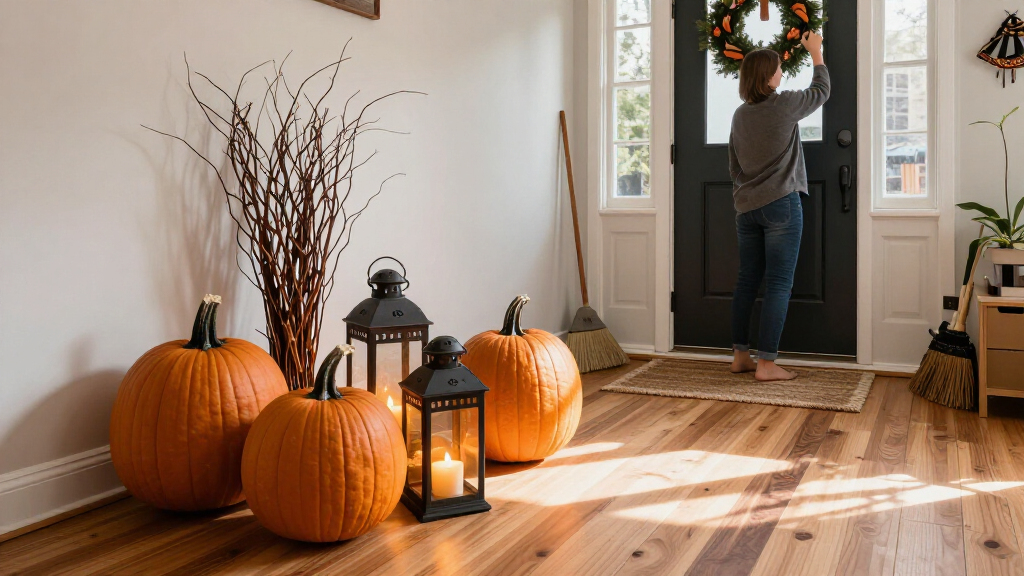
The designers’ first recommendation is to focus a display instead of decorating every surface. Lauren Saab of Saab Studio advises choosing one or two areas and building around a single idea. “Overcrowding is the most common decorating mistake someone can make,” she says. “A single dramatic moment is all you need.” Examples in the report include a candle arrangement on a mantel, a branchy floral display or white pumpkins grouped on an entry console.
Caroline Kopp, founder of her design firm, describes the approach as “repetition over accumulation.” Repeating one motif can make a display feel connected, while mixing multiple themes may make it feel busy. Amy Pigliacampo similarly recommends picking one idea and sticking with it, leaving some open space around the objects.
The other recommendations concern materials and color. Suzette Conrad of Bolt Builders favors amber glass, matte black metal, dark wood and velvet over plastic. Saab suggests combining natural textures, candlelight and darker flowers. For color, designers propose alternatives to a standard orange-and-black scheme, including ivory, rust and olive; burgundy and dark cream; or dark purple. Kopp also points to black and white paired with sculptural forms and strategic lighting.
A More Focused Seasonal Display
The advice matters to readers planning seasonal decorations because it offers a way to make Halloween styling fit an existing home rather than treating the holiday as a reason to fill every room with themed objects. A restrained display can also help homeowners use existing decor, such as ceramics, plants or vintage finds, alongside a few seasonal pieces.
The report does not establish that particular materials or palettes are objectively better. Its designers are describing aesthetic preferences. Their shared point is that cohesion and editing can matter as much as the number of decorations: a limited palette, repeated motif and clear focal point may make a display feel more deliberate. Those choices can be adapted to different interiors and budgets rather than requiring a complete seasonal makeover.
The designers also leave room for family preferences. House Beautiful style editor at large Lucy Bamman says large plastic spiders can be appropriate if children enjoy them. That qualification makes the advice less about enforcing one definition of taste and more about matching the display to the people who live with it.
Halloween mantel decoration candles
As an affiliate, we earn on qualifying purchases.
As an affiliate, we earn on qualifying purchases.
Five Principles Behind the Advice
The source article groups the guidance around five broad principles: restraint, material choice, color, repetition and personal fit. The recommendations are related rather than a strict decorating checklist. For example, choosing one focal point can go hand in hand with repeating a color or texture, while using natural foliage can bring seasonal interest without relying on overtly themed props.
Designers suggest seasonal flowers, leaves, pumpkins and gourds as alternatives or additions to manufactured decorations. Bamman names maple and oak leaves, stalky corn, potted yarrow and black-eyed Susans as options she likes. Pigliacampo also recommends considering a home’s existing color scheme and using objects that complement it. The report’s examples are suggestions from individual designers, not requirements for every home.
““It’s about the atmosphere.””
— Lauren Saab, Saab Studio
Style Advice, Not a Guarantee
The recommendations are subjective design opinions gathered by House Beautiful. The source does not report consumer research, testing or a single standard for what counts as elevated Halloween decor, and individual results will depend on a home’s style, lighting, budget and preferences.
The article also does not give product prices, specific sourcing information or detailed instructions for arranging each example. Its suggestions are broad principles rather than a shopping list. Readers may choose different materials or colors and still follow the underlying advice to edit the display and make its elements feel connected.
How Readers Can Apply the Rules
The source describes no scheduled follow-up or upcoming announcement. For readers planning a display, the practical next step is to choose a focal area, decide on one motif and check the room’s existing colors before adding seasonal pieces. A few contrasting textures—such as glass, wood, metal or fabric—can then build out the idea without requiring decorations on every surface.
Households can adjust the approach to their needs: the designers’ preference for understated materials does not rule out playful decorations, particularly when children enjoy them. The report’s central recommendation is to make deliberate choices, whether the result is a muted arrangement of foliage and candles or a more exuberant front-yard display.
Key Questions
What are the designers’ five main Halloween decorating recommendations?
They recommend using restraint, choosing tactile materials, coordinating colors, repeating a motif and adapting the display to the home and household.
Which materials do the designers suggest?
Examples include amber glass, matte black metal, dark wood and velvet, along with ceramics, natural foliage and other pieces already in the home. These are suggestions, not required materials.
Do the designers say to avoid orange and black?
Some designers recommend trying other palettes, such as ivory, rust and olive, or burgundy and dark cream. The report also includes black-and-white ideas; it presents alternatives, not a rule that orange and black cannot be used.
Is the advice meant to rule out playful decorations?
No. Lucy Bamman says large plastic spiders may be worth using if children enjoy them. The article’s advice is to choose a style that suits the household, rather than apply one aesthetic to every home.
Source: rss
Fall Picks
fall essentials
As an affiliate, we earn on qualifying purchases.